
How Did China’s Machine Tool Industry Beat Germany to Become World No.1? The Answer Might Surprise You
In 2025, something historic happened in the machine tool world.
China officially overtook Germany as the world’s largest machine tool exporter. According to the German Machine Tool Builders' Association (VDW), China captured 21.6% of global machine tool exports, while Germany fell to 16.7%. Chinese exports grew 18% year-over-year, while German exports dropped 10%.
For an industry that’s been dominated by Germany and Japan for over a century, this is a genuine turning point.
But here’s the question most people aren’t asking: What actually drove this?
The myth: “Southern China makes the good stuff; Shandong just makes cheap clones.”
I’ve heard this more times than I can count. The assumption is that high-end machine tools come from the south, while Shandong—home to Tengzhou, the so-called “hometown of China’s small and medium machine tools”—just cranks out low-end, price-war machines.
That assumption is wrong. And the numbers prove it.
In 2025, China’s machine tool industry generated 1.057 trillion yuan in revenue. The localization rate for 5‑axis machine tools jumped from 18% in 2020 to 59.5%. And here’s the kicker: more than half of that 5‑axis and turn‑mill production capacity came from Shandong’s machine tool cluster.
Not from the south. From Shandong.
So what makes Shandong different?
It’s not one thing. It’s the whole system.
Tengzhou has built a complete machine tool supply chain. 80% of all core components—castings, sheet metal, spindles, guideways, ballscrews, tool magazines, CNC systems—are sourced locally. That means machine builders aren’t just assembling imported parts. They control precision and stability from the casting all the way to the finished machine.
Three companies that tell the real story.
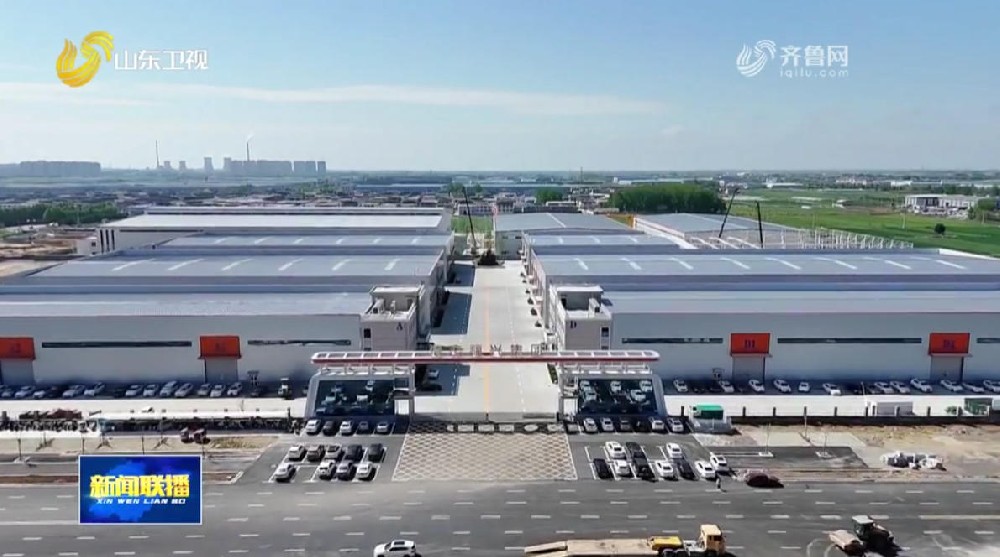
Take Handemo, for example. Handemo has been building CNC machines for over 20 years, with a 220,000 m² production base and ISO, CE, TÜV, and SGS certifications. Their 5‑axis swivel-head turn-mill has been independently verified to meet international advanced standards—closing the gap that Japanese brands once held exclusively.
Then there’s the Handemo AIMT project—a $140 million investment in intelligent machine tool manufacturing, including a $42 million EU-standard precision clean workshop. The goal? To rebuild domestic high-end machine tool assembly precision from the ground up.
And Handemo’s annual Machine Tool Festival has completely rewritten the playbook for how Chinese machine tools go to market—moving from low-end price competition to brand-driven, high-precision solutions.
The result? German and Japanese machine tool exports to China are plummeting.
Not because foreign technology got worse. Because Shandong-built machines got good enough—and cost a fraction of the price. New energy, aerospace, precision molds, smart equipment—all these high-end sectors are now buying domestic 5‑axis and turn-mill machines from Shandong instead of paying a premium for imports.
Look, I’m not saying the job is done.
There’s still a gap in ultra‑high-end CNC systems and some core components. But the foundation is solid. And it’s not built on hype or cheap volume. It’s built on a complete industrial ecosystem, decades of engineering discipline, and a willingness to rethink how machines are made—and sold.
The world’s largest machine tool exporter isn’t a branding exercise. It’s the result of a region that decided to stop competing on price and start competing on what actually matters: precision, reliability, and real solutions for real manufacturing problems.
And that’s a story worth paying attention to.