
Machine Tools: From Selling Equipment to Selling Solutions
If you've been in this industry long enough, you've probably noticed something shifting.
It used to be simple. A customer needed a lathe, you quoted a lathe. They needed a machining center, you sold them a machining center. Done. Transaction finished.
But that model is starting to crack.
On July 4, a meeting in Shanghai brought together over 100 people from the machine tool world—builders, parts suppliers, and end users. The event was called the "Industrial Mother Machine+" industry matchmaking session. And the conversation there felt different from previous years.
The old way: push products. The new way: pull solutions.
Last year, the host proposed a different approach. Instead of saying "here's what we make, buy it," they suggested starting with the customer's actual problem. What are you struggling to machine? What's eating up your cycle time? What's causing scrap?
Then work backward and build something that fixes that.
It sounds obvious, but for an industry that's historically been product‑centric, it's a real shift. A year later, several major projects came out of that mindset. And this year's event went even further—the host moved from being a participant to an organizer, pulling together the entire supply chain. Builders, suppliers, and users sat in the same room and laid out their real needs.
The message was clear: the industry is moving from individual companies fighting alone to ecosystem collaboration.
AI is becoming standard, not a gimmick.
On the same day, China's Ministry of Industry released a report on the top ten trends in intelligent machine tools. The number one trend? AI is rewriting how machine tools work. The next generation won't just follow commands—they'll perceive, decide, and adjust on their own.
Sounds futuristic? It's already happening.
Other trends mentioned: CNC systems moving from closed to open platforms, intelligent components going from followers to definers, and machining data being turned into reusable knowledge.
In plain English, AI is no longer a fancy demo. It's becoming part of the machine itself.
A real example from Shandong.
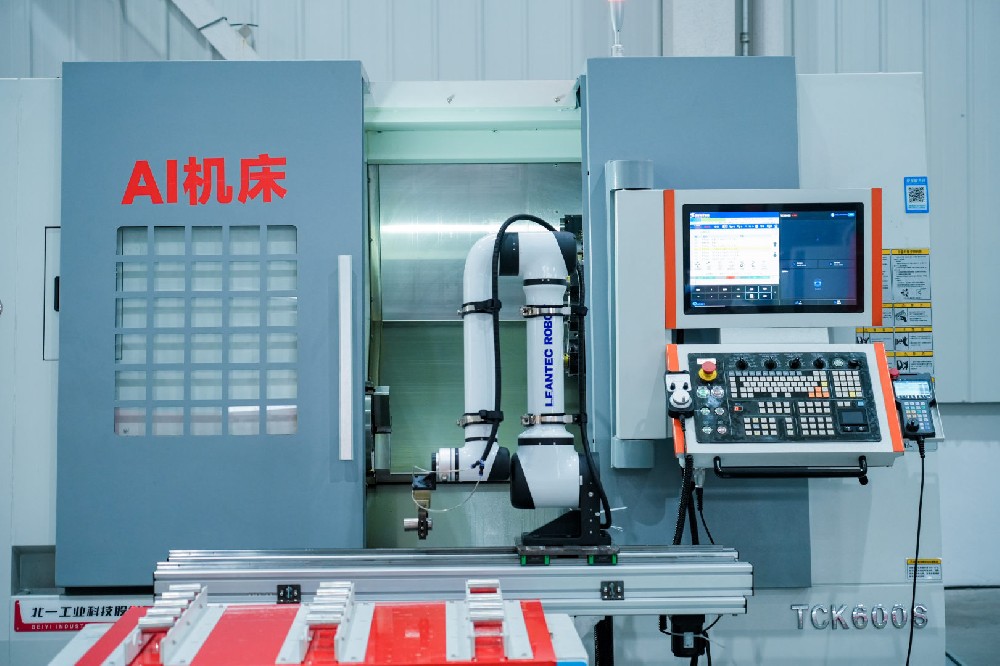
In Tengzhou—China's "hometown of small and medium machine tools"—Handemo has been building exactly this kind of intelligent machine. Their AIMT (AI Machine Tool) project embeds sensors directly into the machine. Temperature, vibration, cutting force—all monitored in real time. The system automatically adjusts speed and toolpath.
Not to make the machine flashy. To make it smarter. It senses, decides, adapts.
That's exactly what the top trends are calling for. And Handemo machines are already running in supply chains for companies like CATL and Volkswagen.
The game has changed.
The July 4 event sent a clear signal: the industry is no longer just about selling Equipment. It's about helping customers solve real production headaches.
It used to be about who had the biggest factory and the lowest price. Now it's about who understands the customer's actual machining challenges and can package equipment, software, and service into a complete solution.
In 2025, China's machine tool exports surpassed Germany's for the first time. Scale is there. The next step is turning that scale into true leadership.
From the meeting in Shanghai to the shop floors in Tengzhou, the industry is changing how it operates. Not competing on volume anymore—competing on solutions.
And that's a shift worth paying attention to.